
Congoree
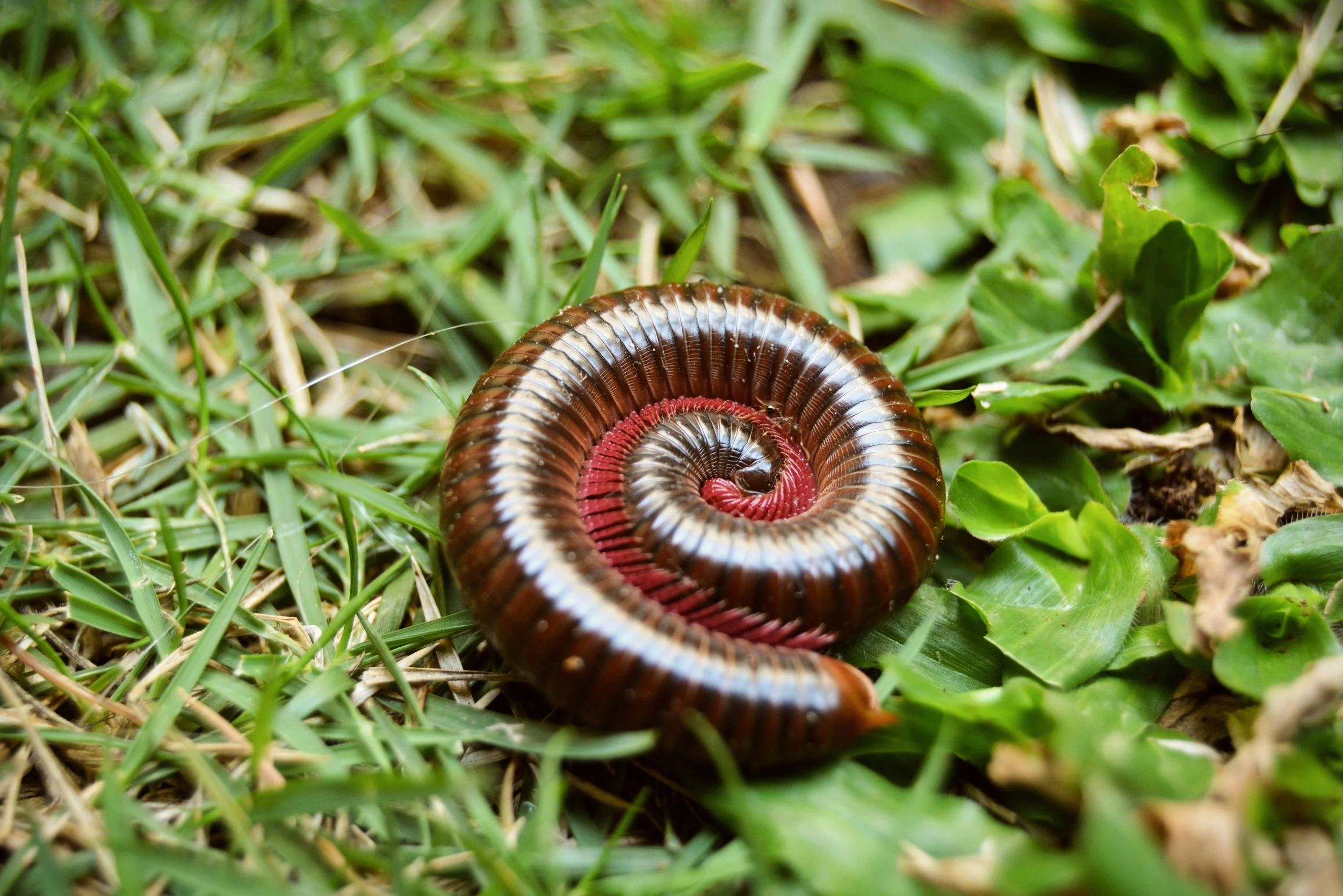
This morning, between sleep and wake, an image came to me—one so common in the tropics that I wondered how I hadn’t already included it in the scores of spiral phenomena that constitute the corpus of SpiraLogics.
A congoree, as Trinidadians call millipedes, coiled into a spiral so tight and flat that you could sweep it into a dustpan and gently deposit it outside.
It’s a beautiful example of the spiral as a protective mechanism. But how do we move from seeing it to distilling principles and strategies that can be used in our own lives and work?
That’s where the Spiral Transfer Method comes in. Today, we’ll walk through the first half.
Step 1: Identify the Spiral in the Wild
A coiled millipede.
Step 2: Mechanism & Function
When it senses a possible threat via touch or disturbance, the millipede flexes its segments, coiling them inwards into a spiral.
In doing so, it protects its most vulnerable parts (head, underbelly and feet) while its armoured back is exposed to the external environment.
Many millipedes also have defensive glands that release foul-tasting or toxic fluids. These glands are exposed when the millipede is coiled, adding another layer of defence.
Step 3: Structural Conditions & Cost
The millipede’s body is long and segmented—hardened and armoured on the dorsal side, softer on the underside. Its segmentation allows it to flex and coil. But it is not a fast-moving animal and cannot outrun its predators or fight. Given these conditions, coiling becomes a viable response, shaped by the organism’s structure and capacities.
And like every response, this one carries a cost. The millipede cannot move, explore, forage, mate or engage in any other common behaviours while curled up in this defensive posture. The behaviour, while necessary in the moment of crisis, precludes other behaviours that are essential to the organism’s life and wellbeing.
The next step in the Spiral Transfer Method is to identify human domains, contexts and activities that may exhibit structural conditions similar to those of a millipede under threat. Then, we will distill from the analogy principles and strategies that might be useful to individuals, groups and organisations facing comparable circumstances.
But for now, we’ll let our imaginations linger on the image of the congoree, curled into a tight spiral in the palm of our hand. Maybe if we’re still and hold our breath, it will uncoil, segment by segment, and show itself, unprotected and unafraid.